
Buenos Aires Travel Guide: Everything You Need to Know Before Visiting

Buenos Aires hits you differently from any other Latin American city. The architecture is unmistakably European — all sweeping boulevards and ornate facades — but the soul is something entirely its own. A city where dinner starts at 10 PM, where strangers invite you to join their asado, and where tango is not a performance put on for tourists but something practiced in plazas on a Tuesday afternoon.
If you are planning a trip, this guide covers everything: neighborhoods, transport, money, safety, food, and the practical details that travel sites usually skip over. Whether you are booking for two weeks or two months, read this before you arrive.
Why Visit Buenos Aires
Buenos Aires consistently ranks among the most visited cities in South America. For travelers from North America and Europe, the favorable exchange rate means world-class steak, excellent wine, live music, and architecture you would not expect outside of Paris — all at a fraction of the cost. The city also rewards long stays. Short-term rentals in Palermo and Puerto Madero offer comfortable apartment living, which is why so many visitors end up extending their stays.
Best Time to Visit
The most comfortable time to visit is spring (September to November) and autumn (March to May), when temperatures sit between 15–25°C and the jacaranda trees are in bloom. Summer (December–February) is hot and humid. Winter (June–August) brings cooler, drier weather with significantly fewer tourists and the best value on flights and accommodation.
Getting to Buenos Aires
Most international flights land at Ezeiza International Airport (EZE), 35 kilometers from the city center. From there: Taxi or Remis (USD 25–35 to Palermo), Tienda Leon shuttle (cheaper, slightly slower), or Uber/Cabify (available at the terminal).
Getting Around the City
Get a SUBE card on day one — it works on the Subte (metro), buses (colectivos), and train lines. Buenos Aires has one of the most functional public transit systems in Latin America. Uber and Cabify are widely used. The Ecobici bike share system offers free usage for the first hour, and Palermo’s parks are particularly bike-friendly.
Neighborhoods: Where to Base Yourself

Palermo
The neighborhood most visitors gravitate toward. Palermo encompasses Palermo Soho (boutiques, cafes, cobblestone streets), Palermo Hollywood (restaurants, bars), and Palermo Chico (embassy row, leafy streets). Central, safe, walkable, and packed with excellent dining and nightlife.
Puerto Madero
The city’s newest and most polished neighborhood, built on reclaimed land along the river. Home to modern apartment towers, upscale restaurants, and an ecological reserve. If you value comfort and a contemporary setting, this is an excellent base.
San Telmo
Buenos Aires’ oldest neighborhood, where colonial architecture mixes with antique markets, milongas (tango venues), and a vibrant street food scene. The Sunday Feria de San Telmo is one of the best outdoor markets in South America.
Recoleta
Home to the famous cemetery where Eva Perón is buried, surrounded by upscale boutiques, museums, and elegant cafes. A quieter, more residential feel compared to Palermo.
Money: Navigating the Argentine Peso
This is the most important practical section in this guide. Argentina has multiple exchange rates: the official rate (your bank card — least favorable), the MEP rate (legal parallel rate via fintech apps like Wise or Prex — significantly better), and the blue rate (informal street exchange). Bring USD cash in large denominations and research the current situation before your trip — it changes frequently.
Food and Dining

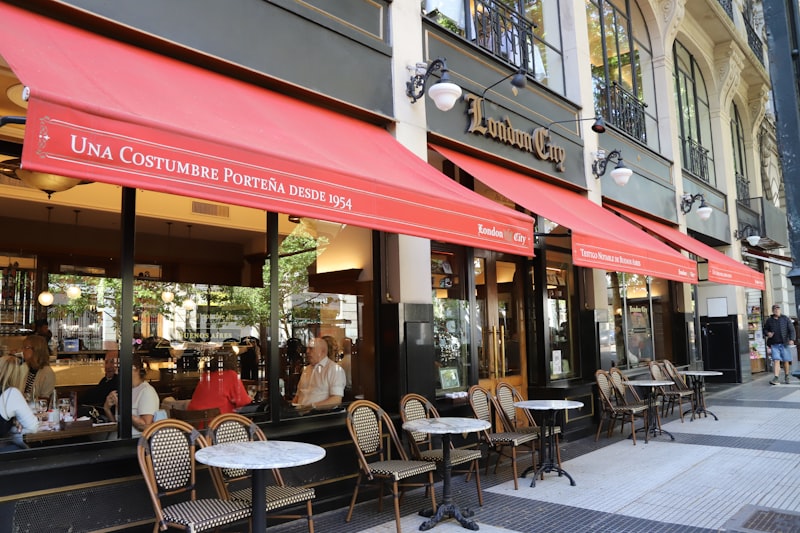
Eating in Buenos Aires is one of travel’s genuine pleasures. Lunch runs 12:30–2:30 PM; dinner starts no earlier than 9 PM. At parrillas (steakhouses), order a bife de chorizo and specify jugoso for medium-rare. Don’t miss empanadas from local bakeries, or a café con leche and medialuna for breakfast — the quintessential Buenos Aires morning.
Safety in Buenos Aires
Buenos Aires is a major city with the risks that come with that. Petty theft happens in crowded areas. Use Uber or registered taxis at night, keep your phone out of sight, and carry a photocopy of your passport. Palermo, Recoleta, Puerto Madero, and Belgrano are the safest neighborhoods for tourists.
Language
Buenos Aires Spanish (Rioplatense) uses vos instead of tú, and a “sh” sound for ll and y — so “yo me llamo” sounds like “sho me shamo.” Porteños appreciate any attempt to speak Spanish. English is widely spoken in tourist-heavy areas and upscale restaurants.
Frequently Asked Questions
Do I need a visa? Citizens of most North American, European, and Australasian countries do not require a visa for stays under 90 days. Check the Argentine government’s official immigration website.
Is it expensive? By global standards, no. The parallel exchange rate makes Argentina genuinely affordable for travelers with foreign currency.
How many days do I need? A week is a teaser. Two weeks lets you settle in. Many visitors end up staying longer than planned.
Can I drink tap water? Yes. Buenos Aires tap water is treated and safe to drink.